


07 May How Much Space Do You Really Need to Build a Pool?
Most homeowners who rule out a pool do it because of yard size. On the Gold Coast, where blocks have been getting tighter for decades, that call is often wrong.
Space requirements depend on pool type, placement, construction method and design. A compact yard, approached correctly, can support a pool that gets used every day. This guide covers what actually determines viability, what options suit different block sizes, and why custom concrete construction handles tight sites better than standard designs.
What Determines Whether You Have Enough Space for a Pool?
Yard size is a starting point, not a verdict. Two backyards of identical dimensions can produce very different outcomes depending on how the space is configured and what’s already in it.
Usable space vs total space is the first distinction. The full yard area matters less than what’s actually available after you account for the house footprint, outdoor living areas, gardens, sheds and any other existing structures. A 200 square metre backyard that’s already half occupied leaves a very different canvas from one that’s open.
Setback and boundary requirements catch many homeowners off guard. Queensland councils require pools to be set back a minimum distance from property boundaries and from the house itself. These vary by council area and reduce the available footprint. An experienced builder will work these out before design begins, not after.
Construction access is often overlooked. Getting excavation equipment into a backyard requires a passable access point, typically at least one metre wide. Narrow side gates or fences that can’t be removed temporarily can limit what’s physically possible. This is solvable in most cases, but worth raising early.
Pool placement relative to living areas also affects how much space is effectively needed. A pool positioned close to the house and integrated with the entertaining area takes up less dedicated yard than one that needs buffer zones on multiple sides. Where the pool sits matters as much as how big it is.
Minimum Practical Pool Dimensions
There’s no single minimum pool size that applies to every situation. The right dimensions depend entirely on how the pool will be used. Three common approaches suit different space profiles and lifestyles.
Plunge Pools
A plunge pool is a compact, deeper pool designed for relaxation, cooling off and low-impact water exercise rather than swimming laps. They work well in smaller backyards and suit the Gold Coast climate well. On a hot January afternoon, a plunge pool does exactly what you need it to.
They can fit into spaces where other pool types can’t, and their smaller surface area means lower running costs and reduced chemical use. For homeowners who want the experience of a pool without the footprint, a plunge pool is often the right solution.
Lap Pools
Lap pools are long and narrow, optimised for swimming rather than socialising. Their value in space-limited situations is that they can be positioned along the length of a narrow block, often in a side yard, running parallel to the house.
Rather than taking up width in the backyard, a lap pool uses linear space that often goes unused. This makes them well-suited to urban blocks in suburbs like Southport, Labrador and Miami, where rear yards are shallow, but side access is available.
Compact Multi-Use Pools
Between a plunge pool and a full family pool sits a range of compact designs that balance swimming, socialising and play. These pools incorporate shallow entry steps, a seating ledge or Baja shelf, and enough depth for swimming without requiring a large footprint.
A custom concrete pool at this scale can be shaped precisely to the available space, with the internal layout designed around how the family actually uses the water rather than fitting everyone into a standard-issue rectangle.
Pool Solutions for Narrow Blocks and Side Yards
Narrow blocks are among the most common constraints on the Gold Coast, particularly in established suburbs close to the water where larger lots have been subdivided. A narrow block doesn’t rule out a pool. It changes where and how it’s built.
Side-yard pools are one of the most practical solutions available. A pool positioned down the side of the house uses space that typically serves no purpose beyond access, and frees up the rear yard for outdoor living, lawn or landscaping. Done well, it integrates cleanly with the house and doesn’t feel like a compromise.
Long, narrow pool designs that run parallel to the home work particularly well on these blocks. The pool follows the natural shape of the available space rather than fighting against it. Built-in steps and seating can be positioned at one end to keep the swimming lane clear.
Access and flow through the yard needs to be maintained even when a pool occupies a side yard. A well-planned design leaves enough clearance to move through comfortably and doesn’t create a dead end. Deck widths, gate placement and coping height all contribute to this.
Privacy near boundaries is worth addressing early on canal-side and close-boundary properties. Boundary fencing, screening plants and pool fencing placement can all create a sense of seclusion without adding significant visual bulk to a tight space.
Smart Layout Ideas for Compact Backyards
Design decisions determine whether a compact pool feels natural or feels squeezed in. These have the most impact.
Connecting the pool directly to the living area removes dead space between indoors and out. A pool that begins just off the kitchen or living room feels like part of the home rather than something separate at the back of the yard.
Combining the pool with the entertaining area rather than treating them as separate zones is one of the most effective ways to make a small yard work harder. Pool coping that doubles as casual seating, a built-in bench along one edge, or a small deck directly adjacent to the pool all reduce the total footprint needed while increasing the usability of the space.
Built-in pool features like steps, ledges and seating benches reduce the amount of furniture needed around the pool, which saves space and keeps the area from feeling cluttered.
Simple landscaping keeps the space from closing in. A few well-chosen plants, light-coloured paving and clean coping lines do more for a compact outdoor area than trying to pack too much in.
Why Custom Pool Design Matters More When Space Is Limited
An off-the-shelf pool design assumes a standard block. The moment your yard is narrow, awkwardly shaped, or constrained by setbacks and existing structures, a standard design starts to waste the space it occupies rather than making the most of it.
Custom concrete pools can be built to any shape, depth or dimension. That flexibility is straightforward on a generous block. On a compact or irregular one, it’s essential. The difference between a pool shaped precisely to the available footprint and one that almost fits is the difference between a yard that flows and one that doesn’t.
Custom design also means the internal layout of the pool can be built around actual use. Where the steps go, how wide the shallow end is, whether there’s a seating ledge and where it sits: these decisions affect how the pool functions every day, not just how it looks on a plan. On a small site, there’s no room for elements that don’t serve a purpose.
It also means better integration with the outdoor area as a whole. Our approach to custom pool construction starts with the site rather than a template, which is what small or awkward blocks need.
Other Practical Considerations
A few additional factors are worth working through before any design is finalised.
Pool Fencing in Tight Spaces
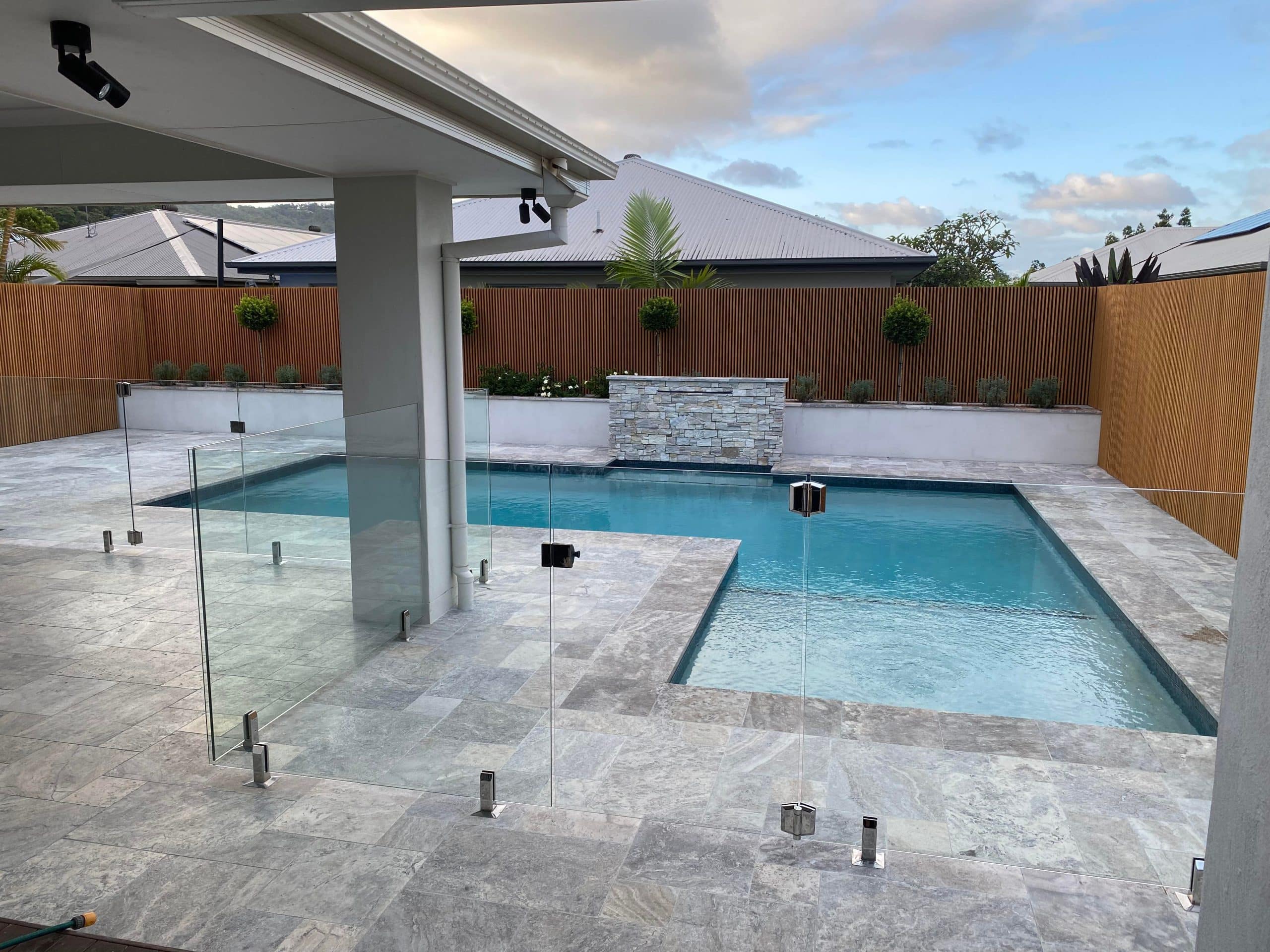
Pool fencing is a legal requirement, and in compact yards it needs to be planned as part of the design rather than added as an afterthought. Glass panel fencing is the most common choice in tight spaces because it maintains sightlines and avoids the visual weight of solid barriers. The fencing layout also affects how the pool is accessed and how the yard circulates it.
Planning for Future Use
A pool on a compact block needs to work for the household over the long term. A design that suits a young family today should still be functional when the children are older, and it should add value at resale rather than complicate it. Our pool building services include a consultation process that factors in long-term usage from the start.
Your Yard May Have More Potential Than You Think
Space limitations rarely tell the full story. The right pool type, placed correctly and built to suit the specific block, produces a result that feels considered rather than constrained.
The Gold Coast’s tighter suburban blocks have produced many excellent pools. A narrow side yard becomes a lap pool. A small rear yard takes a plunge pool with an entertaining area alongside it. A tight irregular block gets a custom shape that fits it properly.
If you’re unsure whether your backyard has enough space for a pool, a site assessment with an experienced concrete pool builder can provide clarity.
Ready to find out what’s possible on your block? Contact our team to arrange an obligation-free site assessment. We’ll give you an honest picture of your options before any commitments are made.
Sorry, the comment form is closed at this time.