


06 Jul Pool Features to Consider at the Design Stage
You’ve decided you want a pool. Now you’re doing the research, and the questions are stacking up.
Most of the advice out there focuses on size and cost. But the decisions that affect how much you actually enjoy a pool are mostly made before the concrete is poured, and many of them cost very little to get right at the design stage and a lot to fix afterwards.
This guide covers the features worth considering before construction begins and why each one matters more early than late.
Key Takeaways
- Structural features like steps, tanning shelves, and built-in seating must be included in the pool shell; they cannot be added later without high cost.
- Run electrical conduit and plumbing connections during construction, even if the end equipment comes later. The infrastructure is cheap at build time and expensive to retrofit.
- Heating is most cost-effective when planned at the design stage. All three options (solar, heat pump, gas) have installation requirements that affect how the pool is built.
- Leave space in the plant room for future equipment. Technology changes; a pool built with room to grow is easier to upgrade.
- The design stage is the most important part of the process. A conversation with your builder before construction starts costs nothing and can save a lot.
Seating, Steps, and Ledges
The shape and depth of your pool determine how your family actually uses it. A pool that suits a 7-year-old looks different from one that still works when they’re 17. Getting this right before construction begins means you won’t be wishing things were different two summers in.
Built-in steps and shallow entry zones matter for safety, particularly if you have young children. Queensland pool safety regulations and Australian Standards set requirements for pool fencing and gate hardware, but the layout inside the pool counts too. Well-placed entry steps and shallow areas reduce the risk of accidental falls into deeper water.
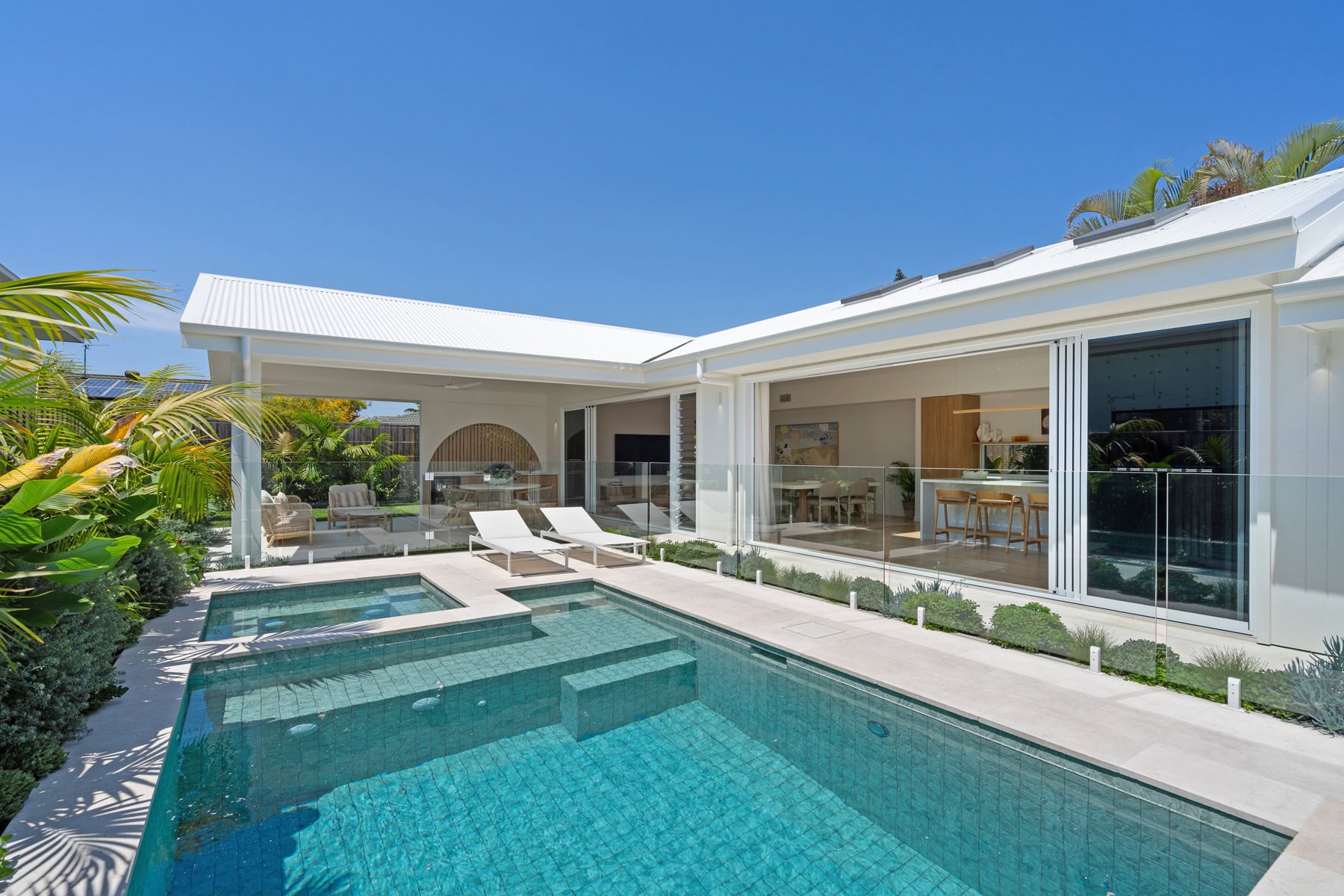
A tanning shelf is a wide, shallow ledge near the entry. It gives young children a safe spot to play, adults a place to sit in the water, and doubles as an entertaining zone when friends are over. It is also one of the most common features homeowners wish they had included once the pool is built.
Built-in bench seating along the pool walls creates a space to relax without getting out. Families who include these features tend to spend more time in and around the pool, which is the whole point.
Most of these features are easiest and most cost-effective to incorporate into the concrete shell during construction. Adding a bench, ledge, or entry step after the build typically means partial excavation and structural work. During planning, they add relatively little to the overall cost.
At Oasis Pool Constructions, we go through step placement, ledge positions, and seating with each family before the design is locked in. A shelf that is 30cm too shallow or steps in the wrong corner sounds minor until you’re using the pool every day.
Lighting and Automation
 On the Gold Coast, the most comfortable swim is often in the early evening. A pool without lighting is a pool you stop using at sunset. Good lighting does more than extend usable hours: it changes how the whole outdoor space feels after dark, and it makes a backyard pool the place people want to gather.
LED underwater lights are the standard choice for modern concrete pools. They are long-lasting, energy-efficient, and can shift colour to suit the mood. Positioned well, they also improve safety by making the pool floor, steps, and edges clearly visible at night. Perimeter and landscape lighting around the pool area adds another layer of visibility and lifts the overall presentation of the outdoor space.
Lighting becomes even more useful when it is connected to an automation system. A smartphone app can let you turn the pool lights on before you step outside, set a scene for an evening gathering, or dim everything down after the kids are in bed. None of this requires any additional wiring at the time of the upgrade, provided the conduit was run during construction.
Retrofitting lighting into a finished concrete shell means cutting into the pool structure, waterproofing each penetration, and running cabling through completed surfaces. It is one of the more avoidable renovation costs.
Automation goes beyond lighting. It covers the systems that keep your pool running cleanly: pumps, filters, chlorination, heating, and pool covers. A basic automated system runs the pump and filter on a timer. More advanced systems let you monitor water chemistry, adjust chemical dosing remotely, and control heating from your phone. For families managing a busy week, the difference between a pool that looks after itself and one that needs constant attention is significant.
The practical point: running electrical conduit during construction costs very little. Running it afterwards means breaking into surfaces that are already finished. If you think you might want smarter pool controls or upgraded lighting in the next few years, the time to run the conduit is now.
Oasis Pool Construction works through this with Gold Coast families before construction begins regularly. The infrastructure goes in during the build. The equipment can follow when the budget allows.
Heating and Future-Proofing
Many Gold Coast pools are comfortably usable for much of the year without heating, but heating can significantly extend the swimming season, particularly for families with young children or those who want to use the pool through winter.
There are three main options for concrete pools in South-East Queensland:
- Solar heating circulates water through roof-mounted panels. Running costs are the lowest of the three options, but it requires sufficient north-facing roof space and consistent sun exposure to work well.
- Heat pumps draw warmth from the air and transfer it to the water. They perform well across most Queensland conditions and are the most common choice for Gold Coast pools. Running costs sit between solar and gas.
- Gas heating warms a pool fastest and works regardless of weather or season. It suits households that want to heat the pool quickly for occasional use. Running costs are the highest of the three.
The reason heating is a design-stage decision: plumbing connections, equipment positioning, and the load on the filtration system all affect how the pool is built. Including heating in the original build is simpler and cheaper than retrofitting it. The same applies to leaving adequate space in the plant room and running conduit for future equipment, so the pool can be upgraded without structural work later.
Homeowners who did not plan for heating during the original build often find the installation itself is manageable. The expensive part is accessing the plumbing and fitting equipment into a plant room that was not designed with it in mind. On a new build, that problem does not exist.
Budget Planning for Future Upgrades
Not everything needs to go in on day one. Some features can wait, provided the groundwork is already there. Knowing which decisions lock in early and which can be deferred is a practical way to manage costs without cutting yourself off from upgrades later.
Features that are structural need to be in the design from the start. Once the shell is poured, the shape, depth, step placement, tanning shelves, and built-in seating are fixed. These are not decisions to defer.
Features that depend on cabling or plumbing can sometimes wait, but only if the infrastructure was run during construction:
- Lighting can be added after the build, but only if conduit was run during construction.
- Heating can be connected later if the plumbing was included in the original install.
- Automation upgrades are straightforward if the conduit and plant room space were planned for up front.
The practical approach: finalise all structural decisions before the build begins. Include all conduit runs and plumbing connections during construction, even if you are not installing the end equipment straight away. The infrastructure is a fraction of the cost at build time compared to retrofitting it later.
The Oasis design consultation works through this with each family. We identify which features belong in the build, which can follow later, and where the infrastructure needs to go to keep those future options open. If budget is a consideration, Swim Now Pay Later options are also available.
Why Proactive Pool Planning Matters
None of this has to be complicated. Working through the features you want and the ones you might want later does not add weeks to the design process. It is a conversation, usually covered in one or two meetings before the build begins.
What it prevents is the more expensive kind of conversation: the one where you are standing next to a finished pool wishing the steps were in a different corner, or the kids want the pool heated, and there is no plumbing connection to work from.
Custom concrete pools are designed and built to the specific dimensions of your block. That precision is the main reason families choose concrete over a prefabricated fibreglass shell. But it also means the design stage is where everything is decided. Once the excavation is done and the concrete is poured, the options narrow considerably.
Oasis Pool Constructions has been building custom concrete pools across the Gold Coast for over 20 years. Greg Freeman has worked with hundreds of families in suburbs from Mudgeeraba to Upper Coomera. The pools that hold up best over time, and the families who are most satisfied with them, are almost always the ones where the design stage was treated as the main event, not a step to get through on the way to construction.
Getting the design right does not cost more than getting it wrong. It just requires asking the right questions before the build begins. You can see exactly how Oasis approaches that in the pool building process.
Planning Your Pool Features: The Key Points
The best pool features are the ones planned before construction begins. Taking the time to consider seating, lighting, automation, heating, and future upgrades now can save considerable cost and frustration later.
Working through these decisions with a pool builder who knows the Gold Coast market, before the design is finalised, gives you the best chance of a pool that works well on day one and keeps working well as your family changes over time.
If you’re planning a custom concrete pool on the Gold Coast, Oasis Pool Constructions can help you work through these decisions before the design is finalised. An on-site consultation with our team helps ensure your pool is designed around your block, your family, and how you will actually use it.
Frequently Asked Questions
What pool features should I plan for at the design stage?
Anything structural: steps, entry zones, depth profiles, tanning shelves, and built-in seating all need to be in the design before the shell is poured. Beyond structure, run conduit for lighting and automation and include plumbing connections for heating, even if you are not installing that equipment straight away. The cost difference between planning for it now and retrofitting it later is significant.
Can lighting be added to an existing concrete pool?
Yes, but it is more involved than planning for it at the build stage. Retrofitting lights into a finished concrete shell requires cutting into the structure, waterproofing the penetrations, and running new cabling. If a conduit was installed during the original construction, the process is much simpler. If not, the cost and disruption increase considerably.
Which heating system suits a Gold Coast pool?
Heat pumps are the most common choice for pools in South-East Queensland. They perform reliably across local conditions and sit in the middle range on running costs. Solar is cheaper to run but needs adequate north-facing roof space. Gas heats fastest but costs more to operate. The right choice depends on how you plan to use the pool and the layout of your property.
How do I future-proof a pool during construction?
Run conduit for electrical cabling and include plumbing connections for heating during the build. Ensure there is space in the plant room for additional equipment. None of this adds significantly to the construction cost, but it means lighting, automation, and heating upgrades can be added later without breaking into finished surfaces or major structural work.
Does planning more features upfront increase the build cost significantly?
Infrastructure runs like conduit and plumbing connections add very little to the overall build cost. Structural features like steps, ledges, and seating are also far cheaper to include during construction than to retrofit. The features that increase costs significantly are those added after the build, not those planned for at the design stage.
Sorry, the comment form is closed at this time.