


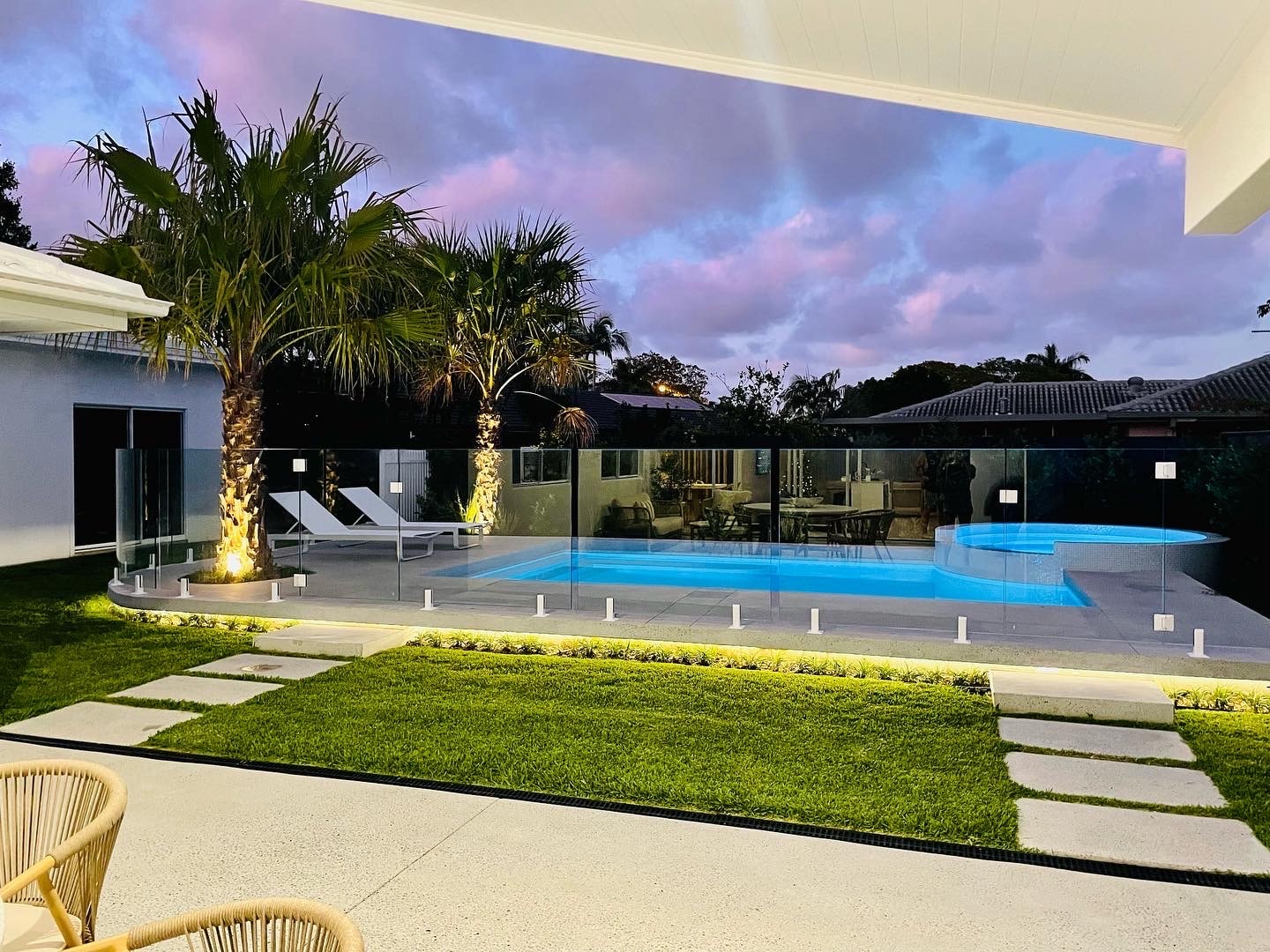
26 May Popular Pool Shapes and Styles for Gold Coast Homes (And When to Use Them)
Pool shape influences how a pool looks, how it functions, and how well it sits alongside your home. Timeless design principles matter more here than trends: the right shape should still feel right in 20 years.
The Gold Coast’s climate and variety of residential blocks mean there’s no single correct answer. What works on a narrow urban block won’t suit an acreage in the hinterland. This guide walks through the most common shapes and styles, what each does well, and when to use them.
Rectangular vs Freeform Pools
Most pool designs fall into one of two broad categories: rectangular or freeform. This is the best starting point for any design conversation.
Rectangular Pools
Straight edges and clean geometry define rectangular pools. They complement contemporary architecture well and sit naturally alongside homes with strong horizontal lines, rendered facades, and structured outdoor living areas.
They’re particularly practical on narrower or more structured blocks. Because the shape is predictable, it’s easier to fit into a defined space without awkward corners or wasted yard. They also double as lap pools when the proportions are right.
See our geometric pools page for examples of how rectangular and geometric designs work across a range of Gold Coast blocks.
Rectangular pools work well for:
- Urban and suburban blocks with defined boundaries
- Homes with a contemporary or minimalist design aesthetic
- Owners who want the option of lap swimming
Freeform Pools
Freeform pools use curved, organic shapes that soften the look of an outdoor space. They suit yards with more room to breathe and homes where the design is less rigid: Queenslander-style houses, traditional brick homes, or properties with mature tropical landscaping.
On a larger Gold Coast block, a freeform pool can anchor a full outdoor entertaining area in a way that feels considered rather than imposed. The relaxed, natural feel lends itself to resort-inspired spaces where the pool sits within a landscaped environment rather than against it.
Freeform pools work well for:
- Larger yards with space for integrated landscaping
- Homes with curved, traditional or tropical design elements
- Owners who want a holiday atmosphere at home
Lap Pools vs Family Pools
Once you’ve considered the overall shape, the next question is function. How the pool gets used every day should drive many of the design decisions.
Lap Pools
A lap pool is long, narrow, and built for purpose. Typically, 10 to 20 metres in length, they prioritise swimming over soaking. They’re one of the better solutions for limited outdoor space, since they can often be positioned along a side yard or fence line without eating up the entire backyard.
On the Gold Coast, where narrow allotments are common in areas like Miami, Labrador and Southport, lap pools give homeowners a full swimming experience without sacrificing the rest of the yard. They tend to age well because their form follows function rather than fashion.
Lap pools work well for:
- Active homeowners who swim regularly
- Narrow blocks or side yards
- Contemporary homes where a clean, simple pool suits the overall design
Family Pools
Family pools are designed for multiple users with different needs: zoned depths, shallow entry steps, seating ledges, and enough space for children to play while adults swim or relax. Baja shelves (shallow sun ledges) have become increasingly popular in Gold Coast homes, giving young children a safe zone while adults sit partially submerged.
A well-designed family pool anticipates how it will be used over the years. The kids who need a shallow end today will be teenagers swimming laps in a few years. Our custom inground pools are designed with that kind of long-term thinking built in.
Family pools work well for:
- Households with children across different age groups
- Homes where the pool is central to entertaining
- Backyards designed for shared, multi-purpose use
Minimalist vs Resort-Style Pools
Beyond shape and function, the overall aesthetic plays a big role in how the finished outdoor space feels. There are two distinct directions we see most often on the Gold Coast:
Minimalist Pool Designs
A minimalist pool is defined by simplicity: straight lines, neutral finishes, and an absence of visual clutter. The pool sits as a coherent part of the outdoor space rather than competing with it for attention.
This approach suits the coastal and contemporary homes common across the Gold Coast. A pool with a charcoal or light grey pebble finish, flush coping, and clean tile lines will look as appropriate in ten years as it does today. Fewer decorative elements also means fewer things that can date.
Minimalist pools suit:
- Contemporary and coastal-style homes
- Homeowners who prefer timeless overstatement
- Outdoor spaces where the landscaping and architecture are the primary focus
Resort-Style Pool Designs
Resort-style pools take inspiration from holiday destinations. Curves, feature tiles, textured finishes, water features, and integrated landscaping all contribute to an immersive outdoor experience. Done well, this type of pool turns a backyard into a destination.
The Gold Coast’s climate makes this style particularly well-suited to local homes. With warm weather from October through to April and mild winters, an outdoor space designed around the pool gets used far more here than in most other parts of the country. A resort-style pool rewards that investment.
Resort-style pools suit:
- Larger properties with room for integrated outdoor living zones
- Homeowners who entertain regularly and want the pool as a centrepiece
- Homes where the goal is a distinctive, personalised outdoor space
Pool Styles That Age Well Over Time
A pool is a long-term investment. Most homeowners will live with the same pool for 20 years or more, which means design decisions made during the build have consequences that extend well beyond the initial installation.
Designs built around a specific moment in design history can date quickly. Simpler shapes and neutral finishes hold up better over time precisely because they’re not tied to what was fashionable during the time of building. That said, simple doesn’t mean generic: proportion, finish quality, and how the pool integrates with the site all contribute to a result that feels considered rather than bland.
The key is being deliberate about which elements are permanent and which can be updated later. A well-proportioned pool with quality construction can always be refreshed with new landscaping or updated coping. A poorly planned shape or layout that doesn’t suit the block is much harder to fix.
Custom concrete pools offer a real advantage here. Unlike prefabricated fibreglass shells, a custom concrete pool can be built to any shape, depth, or dimension. That flexibility means the design can be tailored precisely to the site and the homeowner’s needs. It also means there’s more scope to renovate or update over time without a full replacement.
Choosing a Pool Shape That Suits Your Home and Block
The right design comes from thinking across several things at once.
Yard size and layout are the most immediate constraints. Available space, house position, setbacks from fences and structures, and block orientation all shape what’s possible before any design decisions are made.
Home architecture sets the visual context. A pool that works with the style of the house feels intentional. One that doesn’t create friction that’s hard to ignore, regardless of how good the pool is in isolation.
Lifestyle and usage should drive the functional decisions. A family that swims together daily has different needs than one that uses the pool primarily for weekend entertaining. Being honest about this early prevents design compromises later.
Budget and ongoing maintenance are practical realities. More complex shapes and decorative finishes carry higher upfront and ongoing costs. Understanding the full cost picture before committing to a design avoids surprises down the track.
Good pool design is a collaborative process. An experienced builder will assess the site, understand how the household uses outdoor space, and help translate broad preferences into a design that actually works. You can see how we approach the process on our pool-building services page.
Finding the Right Fit for Your Home
There’s no single best pool shape or style. The right answer depends on your block, your home, how you live, and what you want from your outdoor space over the long term.
The Gold Coast supports a wide range of designs. The climate, the variety of block sizes, and the mix of architectural styles across the region mean that with the right approach, most homeowners can achieve something that works visually, functionally, and financially. Custom concrete construction gives you the flexibility to build something that fits precisely rather than approximately.
Exploring pool shapes and styles with an experienced builder can help turn inspiration into a design that truly works.
Ready to work out which pool shape suits your block? Get in touch with our team for an obligation-free consultation. We’ll assess your site, talk through your options, and give you a clear picture of what’s possible.
Sorry, the comment form is closed at this time.